

Table of Contents
- Why Premium Fitness Equipment Costs More: The Real Cost Drivers
- Build Quality and Materials: Where the Money Goes
- Commercial Gym Equipment Cost: What Drives the Price Tag
- Commercial vs. Home Gym Equipment: Key Differences That Affect Price
- Is Commercial Gym Equipment Worth It? A Total Cost of Ownership View
- Cost of Building a Home Gym: Budget vs. Premium
- How to Evaluate Quality Objectively Before You Buy
- Frequently Asked Questions
Last Updated: October 21, 2026
Why Premium Fitness Equipment Costs More: The Real Cost Drivers
Two racks can look identical in a product photo and still differ by thousands of dollars. That gap is the fastest way to understand why premium fitness equipment costs more: the money hides inside steel gauge, weld quality, tolerances, and the testing a manufacturer runs before anything ships.
Premium fitness equipment is gym-grade gear engineered and manufactured to survive years of heavy, repeated loading with minimal maintenance, rather than equipment built to a consumer price point. The difference rarely shows on a spec sheet. It shows in year five.
Build Quality and Materials: Where the Money Goes
Steel is the first cost driver, and it is the one buyers underestimate most.
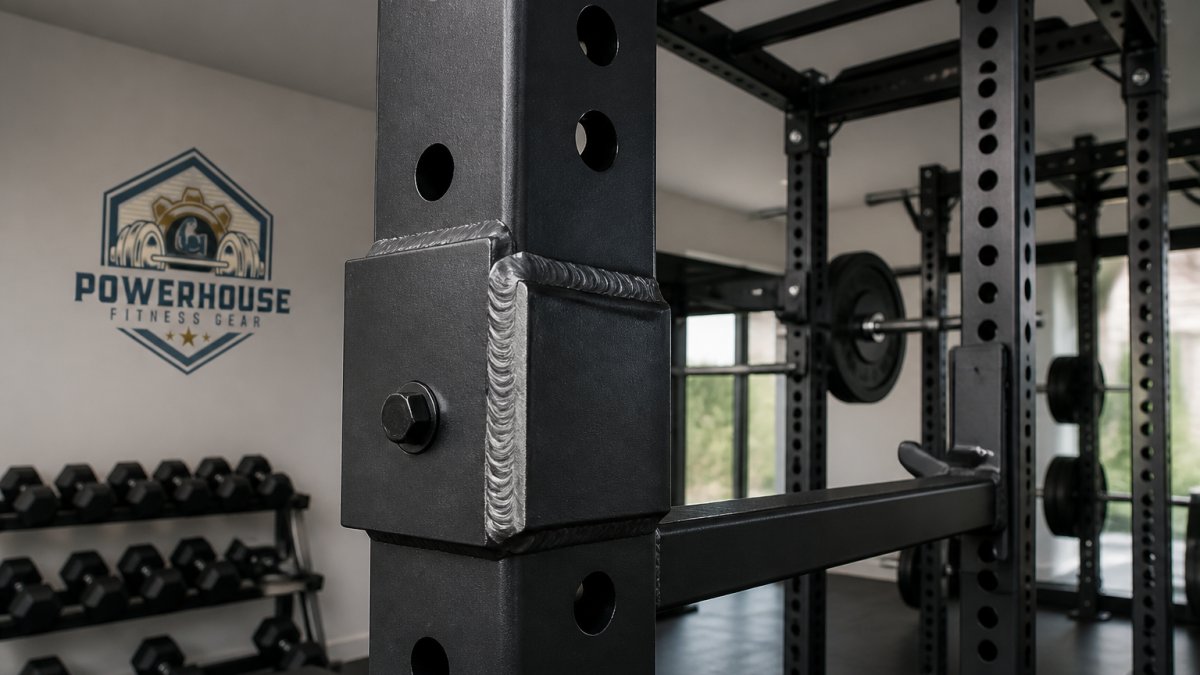
Close-up of a heavy-duty steel power rack frame with visible welds and thick gauge tubing in a clean home gym setting
Powder coating, machined bushings, and precision-cut guide rods add cost too, but they are what keep a barbell path smooth and a cable machine quiet after thousands of cycles. A common mistake is comparing two racks by tube thickness alone.
Commercial Gym Equipment Cost: What Drives the Price Tag
Commercial gym equipment cost reflects three things a home unit never has to absorb: duty cycle, liability, and serviceability. Commercial gear is rated for near-continuous use across long operating hours, which means heavier bearings, stronger cables, and motors on cardio machines built for sustained load rather than weekend sessions.
Manufacturers also carry the cost of third-party testing and certification, quality control programs, and documentation that studios and insurers expect. That overhead is real, and it is baked into every unit.
Commercial vs. Home Gym Equipment: Key Differences That Affect Price
The commercial vs. home gym equipment decision comes down to how hard the gear will work and how long you need it to last. Home equipment is built for one or two users training a few hours a week.
Factor |
Home Gym Equipment |
Commercial Gym Equipment |
|---|---|---|
Duty cycle |
Light, intermittent use |
Near-continuous, multi-user |
Frame and components |
Lighter gauge, standard hardware |
Heavier gauge, serviceable parts |
Testing and certification |
Limited |
Third-party verified |
Maintenance |
Occasional |
Scheduled, documented |
Best for |
Solo training spaces |
Studios, trainers, busy facilities |
For a small boutique studio or a trainer working out of a garage with a handful of clients, the honest answer is that full commercial spec may be more than you need. What you do need is gear rated for the number of sessions you actually run, with parts that can be replaced.
Is Commercial Gym Equipment Worth It? A Total Cost of Ownership View
Is commercial gym equipment worth it? Usually yes, once you count more than the purchase price. Total cost of ownership is purchase price plus delivery and assembly, maintenance, repair, downtime, and replacement, minus retained value at resale. Budget gear wins on the first number and loses on the rest. The problem with most advice on this topic is that it stops at the formula. Here is the same math run as a worked example, using realistic U.S. price ranges rather than a single made-up figure.
A worked example: a premium rack over ten years
Take a heavy-duty power rack in the $1,500-$3,000 range, the tier where thicker steel, jig-welded frames, and serviceable hardware start to appear. A budget rack in the $400-$800 range can look similar in a photo. Run both over a ten-year horizon:
- Purchase price. Premium: $2,200 (midpoint of the range). Budget: $600.
- Delivery and assembly. Freight on a heavy rack commonly runs $150-$400; assembly, if you pay for it, adds $100-$300. Budget racks often ship flat and require more of your own labor, which has a real cost even if it is not a line item.
- Maintenance and repair. A premium rack typically needs occasional hardware checks and maybe a replacement bushing or two over a decade, budget $50-$150 per year for consumables and small parts. A budget rack more often needs weld repairs, replacement hardware, or a full frame swap; a common pattern is one significant repair or replacement in years four through seven.
- Downtime. For a home user, downtime is an inconvenience. For a trainer or small studio, a rack out of service for two weeks can mean rescheduled sessions and lost revenue. Even at a modest $200-$500 per week of displaced revenue, a single two-week outage is a $400-$1,000 hit.
- Resale. Premium strength equipment from a known brand commonly retains a meaningful share of its purchase price, often in the range of 40-60% after several years, depending on condition and brand. Budget racks frequently resell for a small fraction of purchase price, if at all.
Run the arithmetic: the premium rack lands at roughly $2,200 + $300 delivery/assembly + $1,000 maintenance over ten years − $1,000 resale ≈ $2,500 total, or about $250 per year. The budget rack lands at roughly $600 + $150 delivery + $1,200 in repairs and one replacement + $600 downtime − $100 resale ≈ $2,450 total, or about $245 per year, before you count the training sessions lost to a wobbly frame or a failed weld. The headline is not that premium always wins on raw dollars.
The categories where TCO diverges fastest
The gap widens by equipment type. Cardio machines are the clearest case: a premium treadmill or rower with serviceable belts, bearings, and motors can be maintained for years, while a budget unit often becomes uneconomical to repair once a motor or deck fails. Cable machines and functional trainers reward serviceability because cables, pulleys, and bushings are wear items, if they can be replaced, the frame outlives them.
A cheaper unit that needs replacing twice in a decade often costs more per year than a premium unit bought once. Premium gear also holds resale value better because the brand and build quality are known. The honest caveat: if you train a few hours a week and never plan to resell, a well-chosen mid-tier unit can be the rational pick. The framework, not the answer, is what protects your money.
Cost of Building a Home Gym: Budget vs. Premium
The cost of building a home gym scales with how much of it you want to be permanent. A budget build leans on lighter frames, standard cables, and fewer moving parts. A premium build invests in the pieces you load hardest: the rack, the barbell, the bench, and the cardio machine. What most guides skip is the actual range of prices by category, so here is a transparent breakdown with the cost drivers that explain the spread.
Realistic price ranges by category
These are typical U.S. retail ranges for new equipment, not sale prices, and they move with brand, steel gauge, and features:
- Power racks and squat stands. Budget: roughly $300-$800. Mid-tier: $800-$1,500. Premium: $1,500-$3,000+. The spread is driven by steel gauge, weld quality and inspection, jig-welded squareness, hole spacing, and whether the frame is rated for dynamic loading.
- Benches. Budget: $150-$400. Mid-tier: $400-$800. Premium: $800-$1,500+. Flat versus adjustable, pad density and covering, frame gauge, and weight rating account for most of the difference.
- Barbells. Budget: $150-$300. Mid-tier: $300-$600. Premium: $600-$1,200+. Steel grade, tensile strength, sleeve bearings versus bushings, knurl quality, and finish determine price and longevity.
- Cardio machines. Budget treadmills and rowers: $500-$1,500. Mid-tier: $1,500-$3,000. Premium and commercial-grade: $3,000-$8,000+. Motor quality, deck and belt construction, bearing grade, frame rigidity, and serviceability drive the gap.
- Cable machines and functional trainers. Budget: $500-$1,500. Mid-tier: $1,500-$3,500. Premium: $3,500-$8,000+. Cable quality, pulley and bushing grade, weight-stack tolerances, and whether cables and bearings are replaceable matter most.
- Connected and smart equipment. Premium connected machines commonly add $500-$2,000 or more over comparable non-connected models, plus subscription fees that run roughly $10-$50 per month depending on the platform. The hardware cost is real; the recurring cost is the part buyers forget.
Where the money goes, and where to spend it
Spend your money in this order: rack, barbell, bench, cardio, then accessories. Racks and benches carry your body weight plus a loaded bar, so they deserve the strongest steel and the best welds. Barbells are the piece you touch every session and the one that fails most dangerously when it is cheap.
A realistic budget build for a solo lifter, rack, bar, bench, plates, and flooring, commonly lands in the $1,500-$3,000 range. A premium build of the same footprint, with commercial-grade steel and a cardio machine, commonly lands in the $6,000-$12,000 range.
Pricing for any specific build depends on the equipment mix, so request a current quote rather than budgeting from a generic figure. The ranges above are a starting point for planning, not a substitute for a quote on the exact pieces you want.
How to Evaluate Quality Objectively Before You Buy
Judge quality with evidence, not finish. Start with the frame: ask for steel gauge, weld type, and whether the frame is jig-welded. Then check the moving parts, because bearings, bushings, cables, and pulleys are where cheap equipment fails first.
Use this checklist before you commit:
- Steel gauge and weld specification confirmed in writing
- Weight capacity stated for the frame, not just the attachments
- Serviceable parts: cables, belts, and bearings are replaceable
- Warranty terms cover frame, parts, and labor separately
- Independent safety or durability testing referenced where applicable
- Replacement parts and repair process explained clearly
- Stability verified under load, not just on the showroom floor
For safety and durability claims, look for testing that follows recognized standards rather than marketing language. The Consumer Product Safety Commission publishes recall and safety information worth checking for any major equipment purchase, and the ASTM International standards document the test methods manufacturers reference for fitness equipment.
On warranties, ask three questions: what is covered, for how long, and who pays labor. A strong frame warranty paired with a short parts warranty tells you where the manufacturer expects failure.
That is the whole argument in one line: premium fitness equipment costs more because it is engineered, tested, and supported to keep working.
Frequently Asked Questions
Why is commercial gym equipment so expensive?
Commercial gym equipment costs more because it is built to withstand daily use by dozens of people. That means heavier steel frames, better welding, higher weight capacities, and more rigorous testing. Manufacturers also carry higher warranty and service costs. A commercial-grade treadmill might run 10 hours a day, while a home model runs one. The price reflects the engineering needed for that duty cycle, not just brand markup.
What makes premium fitness equipment different from budget equipment?
Premium fitness equipment uses thicker steel, precision bearings, and higher-quality upholstery. Budget models often cut corners on frame gauge, weld quality, and quality control. Premium gear also comes with longer warranties and available replacement parts. In practice, a well-built premium rack can keep performing for years of heavy use, while a budget rack often needs repair or replacing far sooner. The difference shows up in stability under load, smooth operation, and fewer repairs over time.
Is commercial-grade gym equipment worth it for a home gym?
It depends on your training intensity and budget. If you lift heavy, train daily, or have multiple users, commercial-grade equipment can be worth it because it holds up longer and resists wobble. For casual users, mid-tier home equipment may be enough. Consider total cost of ownership: a higher upfront price can be cheaper over 10 years if it avoids repairs and replacement. Check warranty terms and parts availability before deciding.
Does expensive gym equipment last longer?
Generally, yes, but not automatically. Price alone does not guarantee durability. Look for specific indicators: steel gauge, weld quality, weight capacity ratings, and warranty length. A well-built mid-priced rack can outlast a poorly built expensive one. The key is evaluating construction and testing standards, not just the price tag. Independent reviews and spec sheets help separate real quality from marketing claims.


