

Table of Contents
- What Defines a Commercial Grade Treadmill
- Commercial Treadmill vs Residential Treadmill: Key Differences
- Treadmill Motor Horsepower and Weight Capacity Explained
- Best Commercial Treadmill for Home Use: What to Prioritize
- Commercial Treadmill Price: Understanding Total Cost of Ownership
- New, Refurbished, or Certified Pre-Owned: What's the Right Choice
- Matching the Right Treadmill to Your Workout Intensity and Studio Size
- Frequently Asked Questions
Last Updated: October 14, 2026
What Defines a Commercial Grade Treadmill
A commercial grade treadmill is a heavy-duty cardio machine built for high-traffic professional environments like gyms and training facilities. Unlike residential models, it features reinforced frames, continuous-duty motors, and premium running surfaces engineered for durability.
A commercial-grade treadmill handles 8-12 hours of daily use across multiple users without degradation.
At Powerhouse Fitness Gear, we focus on equipment built with this durability in mind.
Commercial Treadmill vs Residential Treadmill: Key Differences
The gap between commercial and residential treadmills extends far beyond price.
Frame construction reveals another difference. Residential frames use welded tubing with minimal reinforcement; commercial frames use thicker-gauge steel, cross-bracing, and stress-tested joints.
Weight capacity tells the story directly. Most residential treadmills max out at 250-300 pounds; commercial models commonly support 400-600.
The motor operates differently too. Commercial continuous-duty motors run indefinitely without overheating, while residential intermittent-duty motors need cooling periods and shut down past their thermal limits.
Treadmill Motor Horsepower and Weight Capacity Explained
Understanding Continuous-Duty Motors
Motor horsepower ratings mislead if you don't know the difference between peak and continuous.
A commercial-grade treadmill uses a continuous-duty motor rated in true horsepower sustained indefinitely. A 3 HP continuous-duty motor delivers that power run after run, handling a full day of client sessions without thermal shutdown.
When evaluating motor specs, look for the continuous horsepower rating explicitly stated. A spec sheet listing only peak horsepower is a red flag.
Weight Capacity and Frame Durability
Weight capacity and frame construction are linked.
Frame durability depends on material thickness, weld quality, and reinforcement design. Commercial treadmills use thicker steel tubing, more cross-bracing, and stress-tested welds that determine how long the equipment stays stable and aligned.
The running surface connects to frame durability too. A stronger frame keeps the belt tracking properly for years, while a weaker frame flexes, causing misalignment and premature wear.
Best Commercial Treadmill for Home Use: What to Prioritize
Space, Noise, and Electrical Considerations
A commercial-grade treadmill for home gym environments brings practical considerations that don't apply in commercial facilities.
Noise matters in residential settings. Commercial treadmills run heavier motors and industrial-grade components, and some generate 75-80 decibels, loud enough to disturb neighbors. Newer models use better vibration isolation, but noise remains a consideration.
Electrical requirements matter too. Many commercial treadmills need 20-amp circuits, while standard residential circuits are 15-amp, so you may need an electrician to install dedicated power.
Running Surface and Cushioning Impact
The running surface on a commercial-grade treadmill is typically longer and wider than residential models.
Cushioning systems vary. Commercial treadmills use spring-based or elastomer-based shock absorption: springs feel firmer and more responsive, elastomers reduce impact more but feel softer.
The deck material beneath the belt affects performance too. Premium commercial decks use composites that absorb impact while staying responsive; cheaper models use plywood, which wears faster.
Commercial Treadmill Price: Understanding Total Cost of Ownership
Sticker price is the smallest number in the ownership equation. A commercial-grade treadmill for home gym use carries delivery, rigging, electrical, consumables, and service costs that can add 20-40% to the first-year outlay.
Delivery, Rigging, and Installation
Commercial treadmills typically ship on a pallet and weigh 250-450 pounds assembled, which changes delivery:
- Curbside freight is the default for most online sellers. The truck driver is not obligated to bring the pallet inside, up stairs, or around tight corners.
- Inside delivery usually adds a liftgate fee plus a per-flight-of-stairs charge. Expect a separate line item for each obstacle.
- White-glove assembly, uncrating, carrying to the room, assembling the console and handrails, and hauling away the pallet, is the tier most home buyers actually need, and it is priced accordingly.
Before ordering, measure every doorway, hallway turn, and stairwell the crate must pass through. Commercial decks often ship pre-assembled, so the crate footprint exceeds the finished treadmill, if it won't fit, you're paying return freight.
Electrical Work and Operating Cost
Many commercial treadmills draw more current than a standard 15-amp household circuit can safely supply, especially during high-incline, high-speed intervals. A dedicated 20-amp circuit is common, so budget for a licensed electrician if your gym lacks one.
Operating cost is smaller than most assume but not zero. A treadmill running a 3-4 HP continuous-duty motor under load draws roughly what a space heater does. Check the motor's amperage or wattage rating and multiply by your local rate.
Consumables, Service, and Repair Economics
Commercial treadmills are durable, not maintenance-free. The wear items and their typical service intervals:
| Item | Typical Interval | Notes |
|---|---|---|
| Belt lubrication | Every 1,500-3,000 miles or per manufacturer | Some decks are self-lubricating; most are not |
| Walking belt replacement | 3-7 years in home use | Heavier users and high incline shorten life |
| Deck replacement | 5-10 years | Flip or replace depending on wear pattern |
| Roller bearings | 5-10 years | Noise and belt tracking are early warning signs |
| Console/electronics | Variable | Often the first major failure on older units |
Service economics matter more than the parts. Commercial equipment is heavy, and a technician may charge a trip fee plus hourly labor on top of parts, in many markets, one belt-and-deck service call approaches the cost of a mid-range residential treadmill. Buy a brand with a documented parts channel and local service network.
Warranty Coverage Is Part of the Price
A long warranty only has value if it covers the parts that fail and service is available where you live. Read the warranty document, not the marketing summary, and confirm:
- Whether labor is covered or parts-only
- Whether belt, deck, and rollers are excluded as wear items
- Whether coverage is prorated after the first year or two
- Whether in-home service is included or you must ship components back
- Whether the warranty transfers if you sell the machine
A 7-year parts / 2-year labor warranty with a strong local service network is often worth more than a 10-year headline that excludes everything that actually breaks.
New, Refurbished, or Certified Pre-Owned: What's the Right Choice
The three labels sound like a simple quality ladder, but they describe three very different risk profiles. A "refurbished" unit from a manufacturer's authorized program is a fundamentally different product from one flipped by an online reseller, the process matters more than the label.
What Each Category Actually Means
New. Full manufacturer warranty, current model year, zero hours on all components.
Refurbished. The unit was returned, traded in, or pulled from a commercial account, then restored.
Certified pre-owned. A used unit that passed an inspection checklist set by the seller or a third party. The certification is only as good as the checklist and inspector, ask to see it.
A Pre-Purchase Inspection Checklist
Whether buying refurbished, certified pre-owned, or used from a private seller, run the same inspection. If you can't inspect in person, ask for video and photos.
- Motor hours or odometer reading. Many commercial consoles log total hours or distance. A machine with 15,000 hours has lived a full commercial life; one with 800 hours is barely broken in.
- Belt condition. Look for glazing, fraying edges, and a visible seam. A belt tracking straight under load is good; one that wanders signals frame or roller problems.
- Deck wear. Run your hand under the belt (power off, unplugged) and feel for grooves, ridges, or a worn-through patch. A scored deck means replacement, not resurfacing.
- Roller bearings. Spin each roller by hand. Grinding or roughness means replacement.
- Frame and welds. Look for cracks, rust at weld points, and evidence of a dropped or tipped machine.
- Console and electronics. Test every button, the incline motor through its full range, speed changes, and connected features. Electronics are the most expensive single component to replace.
- Incline mechanism. Run incline from minimum to maximum and back. Listen for binding or grinding.
- Safety features. Confirm the safety lanyard and emergency stop function correctly.
- Serial number. Verify it against the manufacturer to confirm model year and that the unit is not reported stolen.
Questions to Ask Before You Commit
- What was the machine's prior use, commercial gym, hotel fitness room, or home?
- What parts were replaced during refurbishment, and are there invoices?
- What is the warranty on the refurbished unit, and who honors it, the manufacturer or the reseller?
- What is the return window, and who pays return freight if the machine arrives damaged?
- Is the original manual and any service history included?
When Each Option Makes Sense
Buy refurbished if the seller is the manufacturer or an authorized dealer, wear items were replaced with documentation, and the warranty is meaningful.
Buy certified pre-owned if you can see the inspection checklist, verify the inspector's independence, and confirm warranty terms in writing.
Walk away from any listing where the seller cannot or will not answer the questions above. There is always another machine.
Matching the Right Treadmill to Your Workout Intensity and Studio Size
The right commercial-grade treadmill depends on your use case.
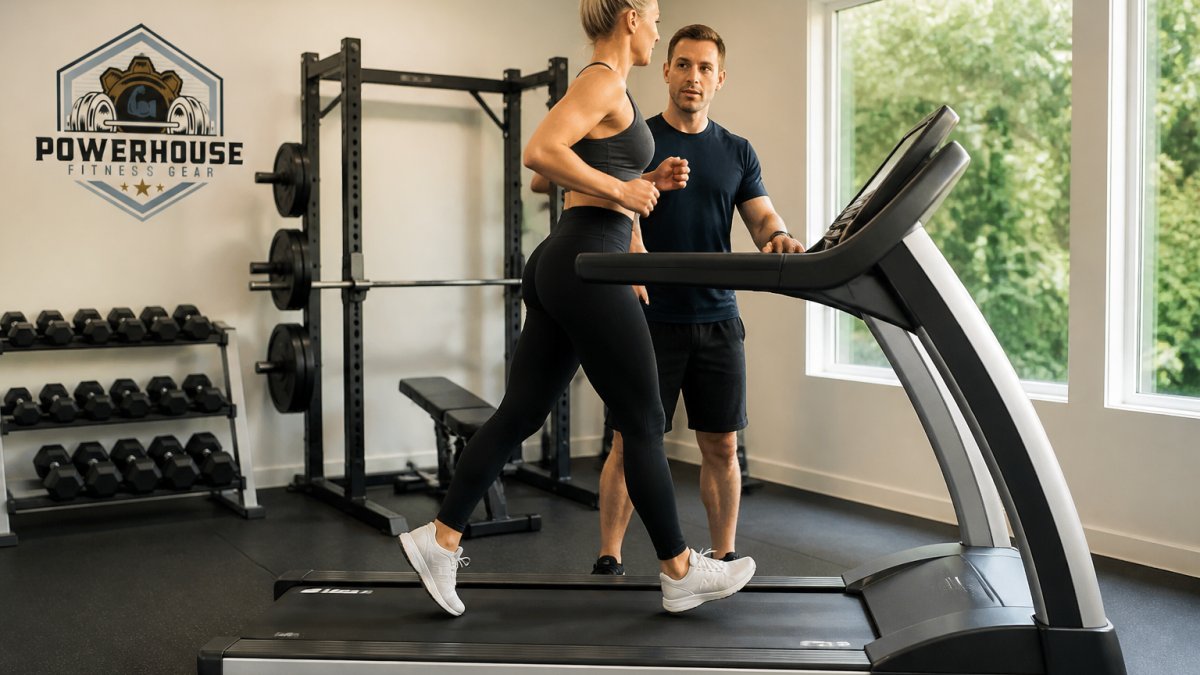
Studio size matters too. A small studio needs a compact commercial model, though "compact" still means 7-8 feet long.
Workout intensity matters significantly.
| Feature | Light Use (1-2 hrs/day) | Moderate Use (3-6 hrs/day) | Heavy Use (8+ hrs/day) |
|---|---|---|---|
| Motor Power | 3-4 HP continuous | 4-5 HP continuous | 5-7 HP continuous |
| Weight Capacity | 350-400 lbs | 400-500 lbs | 500-600 lbs |
| Belt Size | 18-20" wide × 55-60" long | 20" wide × 60" long | 20" wide × 60" long |
| Warranty | 3-5 years parts/labor | 5-7 years parts/labor | 7+ years parts/labor |
| Daily Maintenance | Minimal | Monthly belt check | Weekly inspection |
Equipment that performs well versus equipment that fails comes down to matching specs to actual use.
Investing in a commercial grade treadmill for your home gym is a commitment to equipment that performs consistently for years.
Frequently Asked Questions
What's the difference between a commercial grade treadmill and a residential treadmill?
Commercial grade treadmills are built for high-traffic, daily-use environments with continuous-duty motors rated for 8+ hours per day, heavy-duty frames, and reinforced running belts. Residential models are designed for occasional home use, typically rated for 1-2 hours daily, and have lighter-duty components. Commercial models feature wider running surfaces, higher weight capacities (often 300-400+ lbs), and superior cushioning systems. They cost more upfront but deliver significantly longer lifespans and better performance under intense workout routines.
Are commercial treadmills worth the extra cost for home use?
Yes, if you're running multiple hours per week or hosting client sessions. Commercial treadmills handle high-intensity interval training, frequent daily use, and heavier users without accelerated wear. They typically last 7-10+ years with proper maintenance versus 3-5 years for residential models. The higher upfront investment spreads across years of reliable performance, making the per-year cost competitive. For casual walkers using a treadmill 2-3 times weekly, a residential model may suffice, but serious home gym builders and boutique studio owners see real value in durability and consistency.
What motor horsepower and weight capacity do I actually need?
Motor horsepower should match your workout intensity and user weight. A continuous-duty motor rated 3-4 HP handles most runners and supports incline workouts. If you're training multiple clients or running at high speeds regularly, 5+ HP provides headroom. Weight capacity should exceed your heaviest user by 50-100 lbs for safety margin; most commercial models support 300-400 lbs. Heavier users and high-intensity interval training benefit from the extra capacity and motor power to prevent belt slippage and maintain consistent performance.
What should I budget for maintenance and repairs on a commercial treadmill?
Plan for annual maintenance costs of 5-10% of the purchase price, including belt lubrication, motor inspection, and wear-part replacement. Warranty coverage typically includes parts and labor for 3-7 years; review the specific terms before buying. Repair costs for major components like motors or control consoles can range from a few hundred to over a thousand dollars, but quality commercial models experience fewer breakdowns than residential units. Buying from a manufacturer with strong warranty and accessible service networks reduces unexpected expenses and downtime.


