

Table of Contents
- Why Durable Weight Plates Matter for Home Gyms
- Best Weight Plates for Home Gym: Material Breakdown
- Bumper Plates vs Iron Plates: Which Lasts Longer
- How to Choose Weight Plates That Withstand Heavy Lifting
- Weight Plate Storage Solutions for Long-Term Care
- Floor Protection and Indoor Durability
- Real-World Durability: What to Expect Over Time
- Conclusion
- Frequently Asked Questions
Last Updated: October 18, 2026
Why Durable Weight Plates Matter for Home Gyms
Investing in durable weight plates is one of the smartest decisions you can make when building a home gym. Unlike commercial facilities with maintenance crews and replacement budgets, your equipment needs to survive years of heavy use with minimal wear.
The real cost of cheap plates isn't the initial price, it's the replacement cycle, the downtime, and the frustration of equipment failing mid-workout.
Durable weight plates directly impact three critical factors: safety, consistency, and long-term value. A plate that bounces unpredictably or has an uneven surface throws off your form and increases injury risk.
This guide covers what separates plates that last from those that don't, how to evaluate durability before buying, and what to expect from different materials over time.
Best Weight Plates for Home Gym: Material Breakdown
The material of your weight plates determines how they handle impact, how long they last, and how they perform under repeated stress. Each material type has distinct durability characteristics, and understanding these differences helps you choose the right plates for your training style and space.
Cast Iron Plates: Proven Longevity
Cast iron remains the standard for a reason, it's been proven over decades. Cast iron plates are solid iron throughout with no coating, which means they don't chip or peel.
The trade-off is simplicity. Cast iron plates are loud when dropped, they rust if exposed to moisture, and they require occasional maintenance with oil or wax to prevent corrosion.
Cast iron plates work best for lifters who prioritize durability over noise reduction and don't mind basic maintenance. They're also the most affordable option among durable weight plates, making them ideal for building a complete home gym on a reasonable budget.
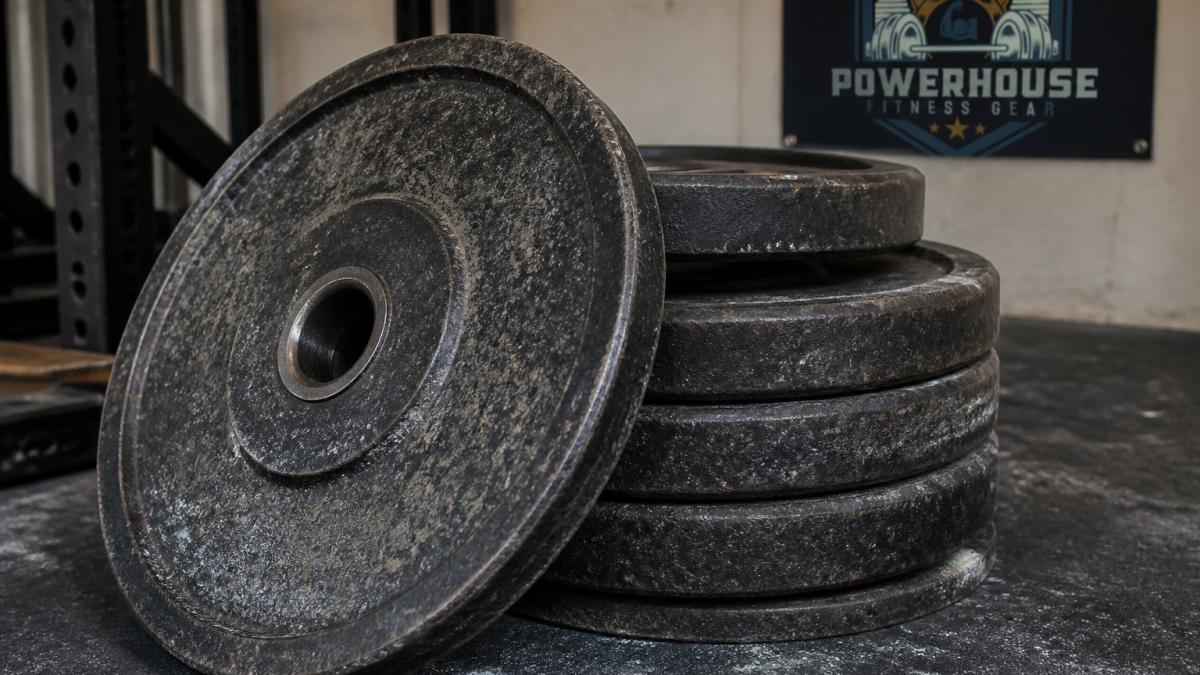
Close-up of cast iron weight plates stacked on a garage gym floor, showing aged patina and worn knurling, with dust and chalk visible
Rubber-Coated and Bumper Plates: Impact Protection
Rubber-coated plates add a layer of elastomer over a steel or iron core, which absorbs impact and reduces noise compared to bare cast iron. Bumper plates take this further, they're designed specifically for dropping and are used in Olympic weightlifting competitions.
The durability question with rubber plates centers on the coating. Quality rubber-coated plates maintain their grip and appearance for years. Poor-quality ones peel, crack, or develop a slippery surface within months.
Rubber-coated plates are ideal for home gyms where noise matters and you're doing heavy compound lifts with frequent drops. Bumper plates specifically excel for Olympic lifting movements like snatches and clean-and-jerks. If you're doing bodybuilding-style training with controlled movements, the extra cost of bumpers isn't justified.
Urethane Plates: Premium Durability
Urethane plates represent the premium tier of durable weight plates. They combine a steel core with a urethane coating that's more durable than rubber, more resistant to cracking, and holds its appearance well over time.
The downside is cost, urethane plates are significantly more expensive than cast iron or standard rubber-coated options. For a home gym, this premium makes sense only if you're doing heavy, frequent training and want equipment built for the long haul.
Urethane plates offer the best of both worlds: they're quieter than cast iron, more durable than rubber, and they maintain their appearance and grip for years. If budget allows, urethane is the smartest long-term investment for serious home gym builders.
Bumper Plates vs Iron Plates: Which Lasts Longer
This comparison matters because the choice affects your entire training experience. Cast iron plates last a very long time if not exposed to extreme moisture, but they're loud and unforgiving if dropped. Bumper plates are designed to absorb impact and last through repeated drops, but the rubber coating can deteriorate if not maintained properly.
For pure longevity, cast iron wins — a well-kept cast iron plate stays in service for a very long time. Bumper plates show coating wear sooner, depending on how heavily they've been used and stored.
However, the real question isn't which lasts longer in years, it's which performs better over time. Bumper plates maintain consistent performance under heavy use because the rubber absorbs impact, protecting the plate's core and your flooring.
For home gym use specifically, bumper plates often make more practical sense. They're safer for floors, quieter for neighbors, and they perform better during the heavy, intense training sessions that justify a home gym investment.
How to Choose Weight Plates That Withstand Heavy Lifting
Selecting durable weight plates requires evaluating several technical factors beyond just the material. These specifications directly determine how plates perform under the stress of heavy training.
Checking Plate Diameter and Barbell Compatibility
Plate diameter affects how your barbell loads and how the plates fit on your bar. Full-size bumper plates are made to a consistent diameter — the ones we carry measure 17.5 inches in every weight — so the bar starts at the same height for deadlifts and other floor-based lifts no matter which plates you load.
Before buying any plates, verify your barbell's sleeve diameter. Measure it or check the manufacturer's specs. Then buy plates designed for that specific sleeve size. This simple step prevents the frustration of ordering plates that don't fit and ensures your durable weight plates work with your existing equipment.
Drop Resistance and Bounce Testing
Drop resistance is how well plates handle impact without cracking, chipping, or deforming. Bumper plates are tested for drop resistance, manufacturers specify the maximum drop height the plates can handle repeatedly without damage.
Bounce refers to how much the plate rebounds after hitting the floor. Bumper plates are engineered for low bounce, which makes lifting safer and more controlled. Cast iron plates bounce unpredictably, which can throw off your balance during heavy lifts.
For home gym use, prioritize plates with minimal bounce and proven impact resistance. Read reviews from users who've actually dropped these plates repeatedly, not just theoretical specs. Real-world feedback reveals which plates hold up and which develop problems after six months of heavy use.
Weight Accuracy and Grip Design
Weight accuracy matters more than most lifters realize. A plate labeled 45 pounds that actually weighs 44 pounds throws off your progressive training. Over months, this small error compounds. Quality manufacturers maintain tolerance within 1-2 percent, while budget brands sometimes deviate by 5 percent or more.
Grip design affects how safely you can handle plates, especially when loading and unloading heavy bars. Tri-grip design, three recessed grip holes, is superior to smooth sides or simple knurling.
Check the product specifications for weight tolerance and grip design. Durable weight plates should list their tolerance clearly and feature grip design suited for heavy use. These details separate equipment built for serious training from budget alternatives.
Weight Plate Storage Solutions for Long-Term Care
How you store plates directly impacts their lifespan. Proper storage prevents rust on cast iron, protects rubber coatings from UV damage, and keeps your gym organized and safe.
The best storage option is a vertical plate tree or horizontal storage rack. These keep plates organized, prevent them from rolling, and allow air circulation around them.
For cast iron plates, store them in a dry environment and wipe them down monthly with a light oil to prevent surface rust.
If you're storing plates long-term without regular use, wrap cast iron plates in paper or cloth to protect them from moisture and dust. This simple step keeps them in condition for years without active maintenance.
Floor Protection and Indoor Durability
Your gym floor takes as much punishment as your plates. Dropping heavy plates repeatedly on concrete or wood eventually causes damage. Protecting your floor extends the life of both the plates and your space.
Use rubber flooring, stall mats, or specialized gym tiles under your lifting area. These absorb impact, reduce noise, and protect concrete from cracking.
The type of flooring you choose affects plate durability too. Smooth rubber mats are easier on plates than rough concrete.
Proper flooring is an investment that protects your equipment, your space, and your neighbors' peace of mind. It's one of the most underrated factors in building a durable home gym setup.
Real-World Durability: What to Expect Over Time
Understanding realistic durability expectations helps you make informed decisions about which plates to buy.
Cast iron plates are the longevity benchmark in a home gym: solid iron has no coating to fail, and with minimal maintenance a set keeps performing for years of regular training. Surface rust can develop, but it's easily cleaned and the structural integrity remains intact.
Quality rubber-coated plates hold up for years of regular use. Heavy use, exposure to sunlight, and poor storage accelerate coating degradation.
Urethane plates sit at the top of the durability range, built to hold up under heavy daily use in commercial gym environments.
Bumper plates specifically designed for Olympic lifting are built for regular heavy drops, and hold up for years when they're stored indoors and kept out of direct sunlight.
These expectations assume proper storage, reasonable maintenance, and normal training use. Extreme conditions, freezing temperatures, constant moisture exposure, or abuse, will shorten them.
Plate Type |
Expected Lifespan |
Best For |
Maintenance Needs |
|---|---|---|---|
Cast Iron |
Long |
Budget-conscious lifters, dry climates |
Occasional oiling |
Rubber-Coated |
Moderate–long |
General home gym use |
Keep dry, avoid UV |
Bumper Plates |
Long |
Olympic lifting, noise-sensitive spaces |
Keep indoors, avoid UV |
Urethane |
Long |
Premium home gyms, long-term investment |
Minimal maintenance |
Conclusion
Building a durable home gym starts with choosing the right weight plates. The material you select, the specifications you verify, and how you store and maintain them determine whether your equipment keeps performing year after year. At Powerhouse Fitness Gear, the plates we carry are Rage Fitness Bumper Plates — heavy-duty rubber bumpers in 10, 15, 25, 35, and 45 lb, sold individually, made to fit a standard 2-inch sleeve, and measuring 17.5 inches in diameter in every weight, so the bar starts at the same height no matter what you load. You'll find them in our Free Weights collection.
Frequently Asked Questions
What makes durable weight plates worth the investment for a home gym?
Durable weight plates resist deformation, chipping, and rusting over years of intense workouts. Cast iron, rubber-coated, and urethane plates maintain their shape and weight accuracy through repeated drops and heavy lifting. A quality set can keep performing for years of regular training with proper storage, which lowers the per-use cost compared with cheaper plates that wear out sooner. They also protect your flooring and reduce noise, which matters in shared living spaces.
How do I choose weight plates that match my barbell and lifting style?
First, check your barbell's sleeve diameter: Olympic barbells use 2-inch sleeves (standard for commercial gyms), while standard barbells use 1-inch sleeves. Match your plate's center hole to this size. Next, consider your lifting style: bumper plates absorb shock during Olympic lifts and drops, while cast iron plates suit powerlifting and steady-state training. For home use, rubber-coated or urethane plates offer a balance of durability, noise reduction, and floor protection without the higher cost of full bumper plate sets.
Are bumper plates or iron plates more durable for a home gym?
Bumper plates excel at impact absorption and bounce reduction, making them ideal if you perform Olympic lifts or drop weights regularly. They last longer under repeated drops and protect your floors. Cast iron plates are more durable for pressing movements and steady lifting; they don't degrade from impact the way bumpers can. For most home gym owners doing mixed training, rubber-coated iron plates offer the best durability balance: they resist rust, reduce noise, protect floors, and cost less than full bumper sets while handling both drop and non-drop movements.
How should I store weight plates to ensure they last longer?
Store plates vertically on a dedicated rack or peg board to prevent warping and reduce floor stress. Keep them in a dry environment to prevent rust, especially with cast iron; a thin coat of oil or wax helps. Avoid stacking plates flat on concrete, which can trap moisture and cause rust or corrosion. For rubber-coated and bumper plates, keep them away from direct sunlight, which degrades the coating over time. Ensure your storage area has good airflow and stays temperature-stable to minimize material expansion and contraction.
RWas this article helpful?
Ready to build your durable home gym? The Rage Fitness Bumper Plates we carry at Powerhouse Fitness Gear are heavy-duty rubber plates built for repeated training, with minimal bounce and a consistent 17.5-inch diameter across every weight we stock — 10, 15, 25, 35, and 45 lb, sold individually. Browse them in our Free Weights collection and get started with equipment built for serious training.


