

Table of Contents
- The Core Question: Is Commercial Gym Equipment Worth It?
- Commercial vs Residential Gym Equipment: What Separates Them
- Cost of Commercial Gym Equipment: Breaking Down the Investment
- Commercial Gym Equipment Lifespan: How Long Does It Really Last?
- Who Should Invest in Commercial-Grade Equipment?
- Resale Value and Equipment ROI: Does Commercial Gear Hold Its Worth?
- Making the Final Decision: Your Investment Checklist
- Frequently Asked Questions
Last Updated: October 4, 2026
The Core Question: Is Commercial Gym Equipment Worth It?
Commercial gym equipment worth the investment depends on your use case, training intensity, and long-term fitness goals. At Powerhouse Fitness Gear, we help serious athletes, personal trainers, and studio owners evaluate real costs versus durability advantages.
If you train hard, frequently, or run a professional facility, commercial-grade equipment typically outlasts residential alternatives by years, translating to lower per-use costs. But it's not ideal for casual home gym owners training a few times per week.
Commercial vs Residential Gym Equipment: What Separates Them
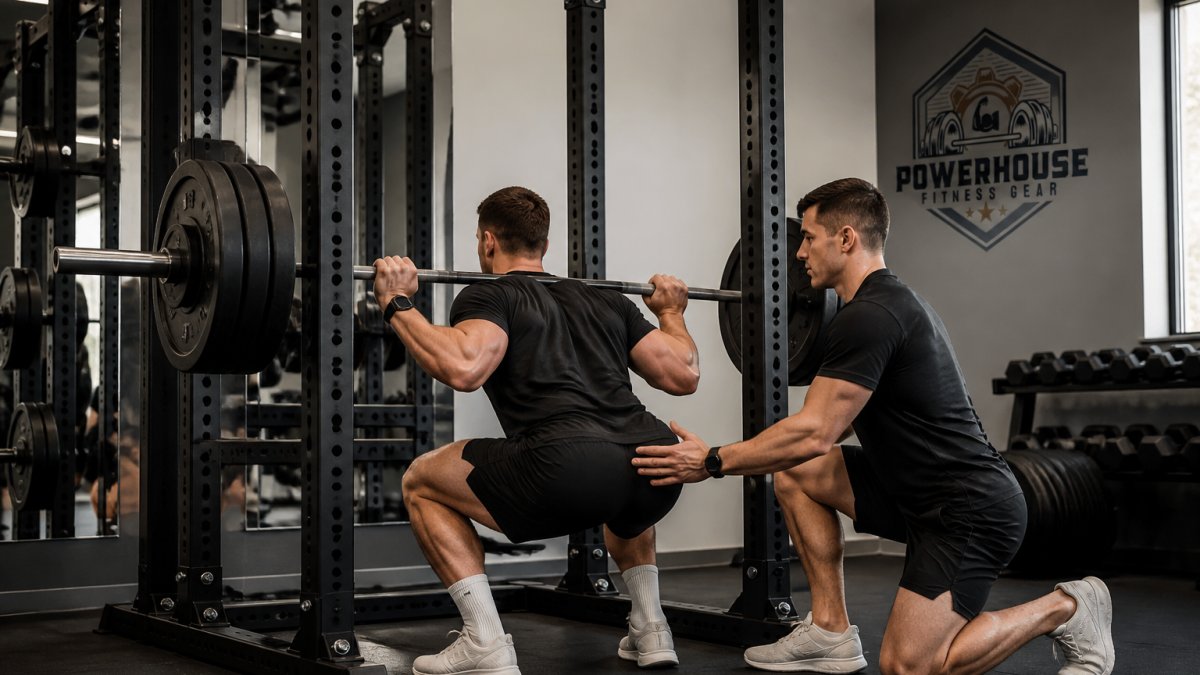
Commercial-grade gear is engineered for daily heavy use; residential equipment assumes moderate, occasional training.
Build Quality and Durability Standards
Commercial equipment uses heavier steel gauge, reinforced welds, and industrial-grade components. Commercial uprights use thicker-walled tubing, benches feature reinforced leg braces, and cable systems employ sealed bearings instead of open bushings. These differences directly affect how long equipment performs before maintenance becomes necessary.
A commercial-grade dumbbell set might cost 40 percent more upfront but remains in perfect condition after five years of daily use, while a residential set may deteriorate within two years.
Weight Capacity and Safety Standards
Commercial equipment carries higher weight capacity ratings, a commercial barbell rated for 1,500 pounds versus 300 pounds for residential, indicating stronger construction throughout.
Commercial equipment must meet ASTM International standards for fitness equipment, defining minimum requirements for structural integrity and failure tolerance. Residential equipment often meets lower thresholds. Commercial-grade gear has more structural reserve to handle accidental overloads and cumulative fatigue, which matters especially in commercial settings where liability is critical.
Cost of Commercial Gym Equipment: Breaking Down the Investment
Commercial gym equipment costs significantly more than residential alternatives. Understanding where that money goes helps you evaluate whether the investment makes sense.
Initial Purchase Price vs. Long-Term Value
Commercial-grade equipment typically costs 30-50 percent more upfront, but price per use tells a different story. If a commercial dumbbell set lasts three times as long with zero repairs, the per-use cost is actually lower. For serious athletes, personal trainers, and studio owners, the answer favors commercial equipment quickly.
Total Cost of Ownership: What You Actually Pay
Total cost of ownership (TCO) includes purchase price, maintenance, repairs, downtime, and eventual replacement or resale value. This is where commercial equipment often wins despite the higher initial price.
Commercial equipment requires predictable, affordable routine maintenance (belt lubrication, cable inspection, bearing checks). Residential equipment often fails suddenly, requiring expensive emergency repairs. Commercial equipment also carries longer warranties with faster service options.
Commercial Gym Equipment Lifespan: How Long Does It Really Last?
Commercial-grade equipment lasts significantly longer than residential alternatives when properly maintained. Understanding realistic lifespan expectations helps you project long-term costs.
Maintenance Requirements and Wear Patterns
Commercial equipment experiences predictable wear patterns, allowing you to budget for maintenance and avoid surprise failures. Residential equipment often fails unpredictably, welds crack, components rust, bearings seize, making budgeting difficult and creating frustration during critical training cycles.
A well-maintained commercial barbell lasts 10+ years; a commercial cable machine typically lasts 8-12 years. Residential equipment often shows significant degradation within 3-5 years.
Warranty Coverage and Repair Accessibility
Commercial equipment typically includes 3-5 year warranties with parts and labor coverage and repair service within days. Residential equipment often includes 1-2 year warranties covering defects only, with slower repair service. Powerhouse Fitness Gear partners with manufacturers that prioritize repair accessibility and warranty support.
Who Should Invest in Commercial-Grade Equipment?
Commercial gym equipment makes sense for specific use cases. Understanding whether you fit those cases helps you avoid overspending on features you won't use.
Home Gym Enthusiasts and Serious Athletes
If you train 5+ days per week with heavy loads, commercial-grade equipment pays for itself through durability and reliability. Personal trainers should invest in commercial-grade equipment, it signals professionalism and handles higher use rates. Athletes training for competition especially benefit from commercial equipment's reliability.
Personal Trainers and Small Studio Owners
If you run a small training studio with 10-20 clients, commercial-grade equipment is essential, the use rate justifies the investment immediately. Commercial equipment also reduces liability risk by meeting ASTM standards and carrying proper warranty coverage. It directly affects your ability to deliver consistent client experiences and protect your business.
Resale Value and Equipment ROI: Does Commercial Gear Hold Its Worth?
Commercial equipment retains resale value better than residential alternatives. This matters if you eventually upgrade or close your facility. But understanding the used market, and how to buy and sell wisely, can significantly improve your ROI.
Resale Value Retention: The Numbers
A commercial-grade power rack typically sells for 50-60 percent of its original purchase price after 5 years of use. A residential power rack might sell for 20-30 percent of original price.
Quality commercial equipment from established manufacturers retains value because buyers know it will perform reliably for years. Residential equipment depreciates faster because buyers assume it's near the end of its useful life.
Resale value varies by equipment type:
- Cable machines: 50-65% of original price after 5 years (high demand in used market)
- Power racks and squat stands: 55-70% (durable, minimal wear)
- Dumbbells and plates: 60-75% (nearly indestructible if maintained)
- Benches: 40-55% (upholstery wear reduces value)
- Treadmills and cardio equipment: 25-40% (motor and electronic wear)
If you eventually sell your home gym or upgrade your studio equipment, commercial-grade gear recovers more of your initial investment. This effectively lowers your true cost of ownership.
Buying Used Commercial Equipment: Inspection Checklist
The used commercial equipment market is robust, with significant savings available, but quality varies widely. Knowing what to inspect protects you from purchasing worn-out or damaged equipment.
Structural and Weld Inspection:
- Examine all welds for cracks, rust, or separation. Run your hand along welds; they should be smooth and continuous.
- Check frame alignment by looking for bends, dents, or visible stress marks.
- Test all bolts and fasteners; they should be tight and show minimal corrosion.
- Look for rust in crevices or joints; surface rust is cosmetic, but deep rust indicates poor maintenance.
Cable and Pulley Systems:
- Inspect cables for fraying, kinks, or visible damage. Cables should move smoothly without hesitation.
- Check pulleys for flat spots, cracks, or wobbling. Spin them by hand; they should rotate freely.
- Listen for grinding or squeaking; these indicate bearing wear.
- Ask for maintenance records; reputable sellers document cable replacements and bearing service.
Upholstery and Padding:
- Examine upholstery for tears, compression, or fading. Minor wear is acceptable; large tears reduce resale value later.
- Press on padding; it should have some give. Completely flattened padding indicates heavy use and may need replacement ($200-$500 per piece).
- Check for mold or odors, which indicate storage in damp conditions.
Weight Stack and Pin Systems:
- Test the weight stack by moving the pin through all positions. It should move smoothly without sticking.
- Check for rust on the stack; light surface rust can be cleaned, but deep pitting reduces durability.
- Verify all weight plates are present and secure.
Power and Electronics (if applicable):
- Test all buttons, displays, and controls. They should respond immediately.
- Ask about power consumption and whether the equipment requires 110V or 220V service.
- Request documentation of any repairs or replacements to electronic components.
Red Flags to Avoid:
- Cracked welds or visible frame damage
- Cables with visible fraying or kinks
- Pulleys that don't spin freely or make grinding sounds
- Upholstery with large tears or mold
- Weight stacks that stick or don't move smoothly
- Missing documentation or maintenance history
- Equipment stored outdoors or in uncontrolled environments
Where to Buy and Sell Used Commercial Equipment
Platforms for Selling:
- Facebook Marketplace and Craigslist: Fastest for local sales; no shipping costs
- eBay and Reverb (for smaller items): Broader audience but higher fees (10-15%)
- Specialty fitness resellers: Lower fees (5-10%) but slower sales; they handle shipping
- Liquidation auctions: Fast if you need to sell quickly, but typically 30-40% below market value
Platforms for Buying:
- Facebook Marketplace: Best for local deals; inspect in person before purchasing
- Craigslist: Largest inventory; always meet in public and bring a friend
- Specialty used fitness retailers: Higher prices but warranty and return options
- Commercial gym liquidations: Excellent deals on bulk equipment; inspect carefully
- Estate sales and auctions: Occasional bargains, but condition varies widely
Timing Your Sale and Purchase
Resale value fluctuates with demand. January and September see peak demand (New Year's resolutions and back-to-school fitness goals). Selling in these months can yield 5-15 percent higher prices. Buying in May-August typically offers better deals as demand drops.
If you're upgrading your home gym or studio, selling old equipment before purchasing new gear can offset 20-40 percent of your upgrade cost. Plan upgrades around these seasonal windows to maximize recovery.
ROI Calculation: When Commercial Equipment Pays for Itself
Commercial equipment's ROI depends on use intensity and resale timing. For a personal trainer with a home studio:
Scenario: $5,000 commercial cable machine
- Year 1: 200 client sessions at $60/session = $12,000 revenue
- Equipment cost per session: $25
- Year 5: Sell for $2,750 (55% retention)
- True five-year cost: $2,250
- Equipment cost per session over 5 years (1,000 sessions): $2.25/session
For a serious home athlete training 5 days per week:
Scenario: $3,500 commercial power rack
- Five-year use: 1,300 training sessions
- Equipment cost per session: $2.69
- Resale value: $1,925 (55% retention)
- True five-year cost: $1,575
- Equipment cost per session: $1.21/session
Commercial equipment becomes financially advantageous when your per-session cost (including resale recovery) falls below what you'd spend replacing residential equipment every 5 years.
Making the Final Decision: Your Investment Checklist
Use this framework to determine whether commercial gym equipment is worth it for your specific situation:
| Factor | Commercial Makes Sense | Residential is Fine |
|---|---|---|
| Training frequency | 5+ days per week | 2-3 days per week |
| Use case | Professional/client use or serious athlete | Casual home training |
| Budget for maintenance | Yes, planned maintenance | Prefer minimal upkeep |
| Use hours | 20+ hours weekly | Under 10 hours weekly |
| Lifespan expectations | 8-12 years | 3-5 years acceptable |
| Resale value importance | Yes, planning to sell | Not a concern |
| Liability risk | High (commercial setting) | Low (personal use) |
Ask yourself honestly: How many hours per week will this equipment actually be used? Will I use it in five years? Do I need it to perform reliably for client sessions or competition training?
If you're building a home gym for occasional personal training, residential equipment serves you well and costs less.
Commercial gym equipment worth the investment when your training demands justify the durability it provides.
Powerhouse Fitness Gear helps you select commercial-grade equipment engineered for long-lasting reliability and superior craftsmanship.
Frequently Asked Questions
What is the difference between residential and commercial gym equipment?
Commercial gym equipment is engineered for heavy daily use with reinforced steel frames, higher weight capacities, and industrial-grade components. Residential equipment prioritizes space efficiency and affordability for lighter, less frequent use. Commercial gear typically features thicker steel gauge, superior upholstery durability, and safety standards designed for multiple users. The biomechanical path and cable systems are also more precise in commercial machines, supporting proper exercise efficiency and reducing injury risk over thousands of repetitions.
How long does commercial gym equipment typically last?
Well-maintained commercial-grade equipment often lasts 10-15 years or longer, depending on usage intensity and maintenance schedule. Residential equipment usually has a lifespan of 5-8 years. Commercial machines are built with heavier-duty components and better warranty coverage, which contributes to their extended equipment lifespan. Regular maintenance, lubricating cables, inspecting welds, and replacing worn upholstery, significantly extends durability and keeps equipment functioning at peak performance.
Is commercial gym equipment worth the higher cost for a small home gym or boutique studio?
Yes, if you plan long-term use and value training results. Commercial-grade equipment justifies its higher cost through superior build quality, safety standards, and longevity. For boutique studios with 10-20 members, commercial gear withstands daily wear and tear, reducing replacement costs over 10 years. For serious home gym enthusiasts, commercial equipment supports progressive overload and biomechanically sound training. The investment return comes from durability, resale value, and the training environment quality it creates, factors that budget residential equipment cannot match.
Does commercial gym equipment hold its resale value?
Commercial-grade equipment retains 40-60% of its purchase value after 5-7 years, significantly better than residential equipment. Heavy-duty construction, established brand reputation, and consistent demand from studios upgrading their facilities support stronger resale value. Used commercial equipment attracts buyers seeking durability without the premium new-equipment price. Proper maintenance, documented service records and clean upholstery, further protects resale value and can offset initial investment costs.


