

Table of Contents
- Why Home Gym Equipment for Longevity Beats Short-Term Buys
- The Evidence Behind Strength and Healthy Aging
- Strength Training Equipment Built to Last
- Low Impact Cardio Machines for Home Workouts
- Benefits of Resistance Training for Longevity
- How to Maintain Home Gym Equipment for Decades of Use
- Matching Equipment to Your Space, Budget, and Training Goals
- Conclusion: Build a Home Gym That Ages With You
- Frequently Asked Questions
Last Updated: October 5, 2026
Why Home Gym Equipment for Longevity Beats Short-Term Buys
The best home gym equipment for longevity is gear you will still be using in ten or twenty years, chosen for durability, joint-friendly movement patterns, and strength work that supports healthy aging.
Most people shop for a home gym like a phone: newest features, lowest price. That fails for longevity training, because equipment must outlast motivation cycles, space changes, and your joints.
The Evidence Behind Strength and Healthy Aging
Strength training is the single most reliable exercise investment for healthy aging. Public health guidance from the CDC physical activity recommendations and the HHS Physical Activity Guidelines for Americans both recommend muscle-strengthening activity at least twice per week for adults, including older adults.
The reasons are practical. Resistance training maintains muscle mass, bone density, balance, and daily function like carrying groceries or getting off the floor.
"Longevity" changes the shopping list: you are not outfitting for a six-week challenge, but building a setup for decades of consistent training.
Strength Training Equipment Built to Last
The best long-term strength setup combines free weights, an adjustable bench, and a way to pull and press safely. Those three cover nearly every movement pattern for healthy aging, and quality versions last a lifetime.
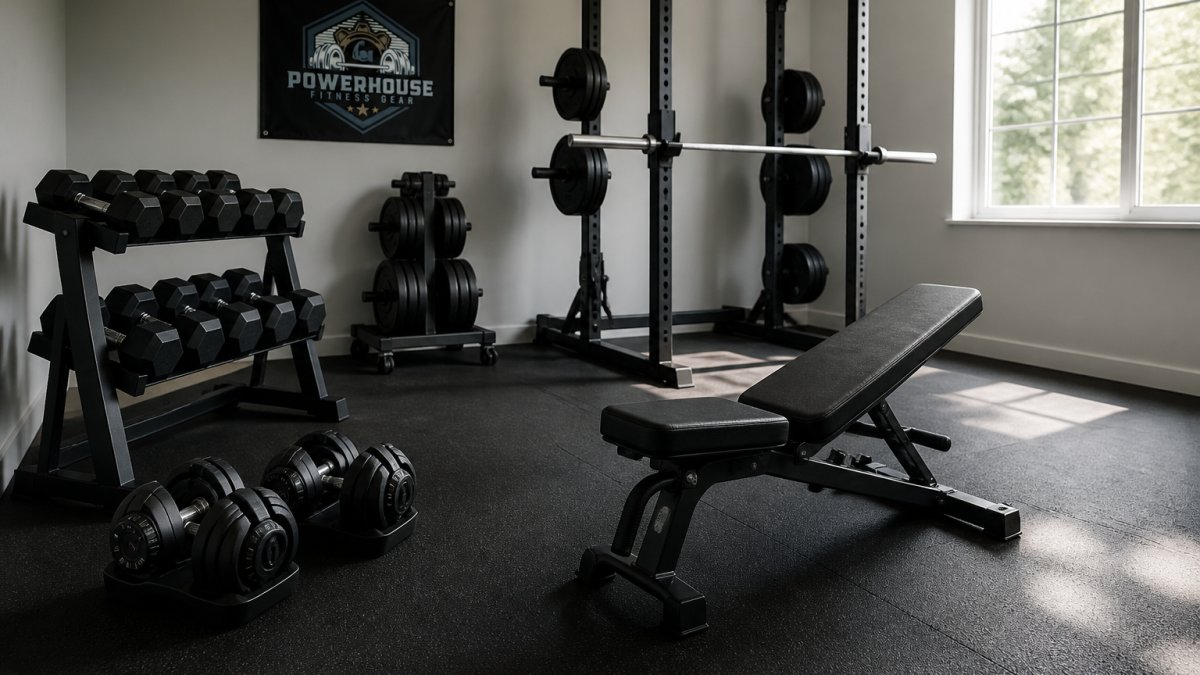
Free Weights and Adjustable Dumbbells
Adjustable dumbbells are the highest-value purchase for most home gyms: one pair replaces a rack of fixed weights and adjusts as you get stronger. Look for metal or composite construction, secure locking mechanisms, and a range light enough for rehab and heavy enough to keep challenging you.
Fixed dumbbells and plates make sense if you have floor space and want zero adjustment time. Cast iron or rubber-coated plates outlast budget vinyl sets, which crack and shed.
Racks, Bars, and Benches
A power rack or squat stand anchors a durable home gym. Look for thick-gauge steel, a stable base, and a pull-up bar rated for body weight plus load. An Olympic bar with quality bearings and knurling outlasts several cheap bars. For a bench, choose a flat-to-incline adjustable model with a wide, stable base and firm padding.
For bodyweight and mobility work, a suspension trainer, rings, or a pull-up bar adds variety without floor space.
Low Impact Cardio Machines for Home Workouts
Low impact cardio machines for home use protect your joints while building the aerobic base that supports heart health and recovery. The best options for longevity training are rowing machines, step-through bikes, and ellipticals.
Rowing machines deliver full-body conditioning with almost no joint impact. Recumbent and step-through bikes suit older adults best, since the wide seat and low entry point reduce strain on hips and knees.
| Machine | Joint Impact | Space Needed | Best For |
|---|---|---|---|
| Rowing machine | Very low | Moderate, stores upright | Full-body conditioning |
| Recumbent bike | Very low | Moderate | Older adults, back support |
| Step-through upright bike | Low | Small | Small spaces, easy mounting |
| Elliptical | Low | Large | Weight-bearing cardio |
A treadmill works if you walk rather than run, but it demands more space and delivers more impact. For most longevity-focused home gyms, one cardio machine plus a strength setup is enough.
Benefits of Resistance Training for Longevity
The benefits of resistance training for longevity come down to function: more muscle, stronger bones, better balance, and greater independence as you age. Unlike cardio alone, it directly counteracts the muscle and bone loss that accelerates in midlife. The real payoff is combining strength with balance, mobility, and aerobic training into one sustainable program.
The Four Pillars of a Longevity Training Week
Most equipment guides stop at "lift twice a week." A longevity-led setup supports four training modes, and your equipment should map to all four:
- Strength (2-3 sessions per week): Progressive resistance through squats, hinges, pushes, pulls, and carries. This is the muscle-and-bone pillar, and it is the one most home gyms are built around.
- Aerobic conditioning (most days, moderate intensity): Steady work on a rower, bike, or elliptical builds the cardiorespiratory fitness that tracks closely with long-term health. Aim for the equivalent of about 150 minutes of moderate activity per week, which public health guidance from the CDC physical activity recommendations and the HHS Physical Activity Guidelines for Americans both describe as the baseline for adults.
- Balance and stability (2-3 short sessions per week): Single-leg work, heel-to-toe walking, and controlled transitions. Balance training is the pillar most home gyms ignore entirely, and it is the one most directly tied to fall prevention.
Practitioners describe a common pattern: people who only lift get strong but stiff, and people who only do cardio lose muscle. Each pillar needs a different tool, which is what makes equipment choices matter.
How Each Equipment Choice Maps to an Outcome
A longevity-led buying guide differs from a standard roundup: instead of asking "is this durable?" ask "which outcome does this support?"
- Adjustable dumbbells and a barbell drive the strength pillar. They let you progress load over years, which is what actually maintains muscle mass and bone density.
- A step-through or recumbent bike drives the aerobic pillar while staying accessible for hips, knees, and backs that do not tolerate impact.
- A rower covers aerobic and strength-endurance at once, which is efficient for small spaces.
Tracking Outcomes So Longevity Stops Being Abstract
Longevity is not a product feature you can buy, it is a trend you measure. A quarterly check keeps the program honest:
- Strength: Can you do more reps or more load on a core lift than three months ago?
- Aerobic capacity: Can you hold a moderate pace on the bike or rower for longer, or at a lower perceived effort?
- Balance: Can you stand on one leg longer, or with less hand support, than last quarter?
If any are flat or declining, the fix is usually a programming adjustment, not a new machine. That is why the best home gym equipment for longevity supports a program you will still be running in ten years.
How to Maintain Home Gym Equipment for Decades of Use
How to maintain home gym equipment comes down to a short, repeatable routine: wipe pads and handles after use, tighten bolts monthly, lubricate cables and guide rods, and inspect cables and belts for fraying.
A simple maintenance schedule keeps gear running for years:
- Wipe upholstery and grips after every session
- Check and tighten bolts and fasteners monthly
- Lubricate cables, guide rods, and bearings quarterly
Beyond maintenance, buy for serviceability. Equipment with replaceable cables, standard-size plates, and commonly available parts stays useful far longer than proprietary systems that cannot be repaired.
Matching Equipment to Your Space, Budget, and Training Goals
The right home gym fits your room, budget, and training goals, in that order. A complete longevity gym does not require much space if you choose versatile equipment, here is what each tier looks like, what it costs, and how much floor space it consumes.
Tier 1: The Starter Longevity Gym (About 20-30 Square Feet)
This is the setup for an apartment, a spare bedroom corner, or anyone testing whether home training will stick. It covers all four pillars at a basic level.
- Adjustable dumbbells (one pair, roughly 5-50 lb per hand)
- A folding or compact adjustable bench
- A suspension trainer or resistance bands for pulling and single-leg work
Realistic total: roughly $700-$1,500 depending on brand and whether you buy new or used.
Space: about 6 ft x 4 ft of working area, with the cardio piece stored against a wall between sessions.
Tier 2: The Mid-Range Longevity Gym (About 60-100 Square Feet)
This is the most common dedicated setup, a garage bay, basement corner, or spare room. It adds real barbell strength work and a permanent cardio station.
- A squat stand or entry-level power rack
- An Olympic bar and a set of bumper or cast-iron plates
- An adjustable bench rated for pressing
Realistic total: roughly $1,800-$3,500. The rack and bar are lifetime purchases; plates and the bench are where most people upgrade later.
Space: about 10 ft x 8 ft, including clearance for a loaded bar and safe spotting room.
Tier 3: The Premium Longevity Gym (About 120-200 Square Feet)
This is a full home gym for someone committed to decades of training, adding redundancy, comfort, and the ability to train multiple people or modes at once.
- A full power rack with a built-in pull-up bar and cable attachment
- A quality Olympic bar plus a second bar for variety
- A full plate set with storage
Realistic total: roughly $4,000-$8,000 or more, driven mostly by rack and cardio quality.
Space: about 14 ft x 10 ft or larger, plus ceiling height for overhead pressing and pull-ups.
Choosing by Constraint, Not by Category
- Small spaces: adjustable dumbbells, a folding bench, a suspension trainer, and a compact rower that stores upright. Skip the rack until you have a dedicated room.
- Dedicated garage or spare room: a power rack, Olympic bar and plates, an adjustable bench, and one cardio machine. This is the highest-value tier for longevity training.
- Older adults or rehab-focused training: a step-through bike or wide-seat recumbent, light adjustable dumbbells, a stable flat bench, and a sturdy chair or rail for supported balance work. Prioritize step-through access and a wide, stable base over load capacity.
The Lifetime Cost Question
Upfront price is only part of the story. Cheaper equipment often carries a higher lifetime cost because it wears out, wobbles, or cannot be repaired. Ask three questions: Are replacement cables, pads, and bearings available? What does the warranty cover, and for how long?
Pricing for equipment depends on the specific product and configuration, so check our website for current pricing and a quote.
Conclusion: Build a Home Gym That Ages With You
The hard part of building a home gym is not choosing equipment. It is resisting the cheapest option that looks the part, then replacing it two years later when it wobbles, squeaks, or hurts to use.
Powerhouse Fitness Gear selects premium strength and cardio equipment from trusted manufacturers, built with superior craftsmanship and designed for long-lasting reliability. If you want gear that supports peak performance and healthy aging for years to come, explore our strength and cardio lineup and build a home gym that ages with you.
Frequently Asked Questions
What is the most effective home gym equipment for long-term health?
The most effective home gym equipment for long-term health combines a few versatile pieces you will actually use consistently. A sturdy bench, adjustable dumbbells or a barbell set, and a low-impact cardio machine like a rower or bike cover most training needs. This home gym equipment supports both strength training and cardio, which are the two pillars of healthy aging. Prioritize durability and adjustability so the gear grows with your fitness level.
How does strength training contribute to longevity?
Strength training helps preserve muscle mass and bone density, both of which decline with age. Research links resistance training to better balance, reduced fall risk, and improved metabolic health. The benefits of resistance training for longevity also include maintaining independence for daily activities. You do not need heavy weights to see results; consistent, moderate resistance training two to three times per week is enough to support long-term health.
What is the average lifespan of gym equipment?
Lifespan depends on build quality and maintenance. Commercial-grade home gym equipment can last 10 to 20 years or more with regular care, while budget models often wear out in 3 to 5 years. Key factors include frame material, bearing quality, and how well you maintain home gym equipment. Cleaning, lubricating moving parts, and tightening bolts on a schedule will extend the life of any piece significantly.
What is the best piece of home gym equipment for over 50s?
For adults over 50, a rowing machine or stationary bike is often the best starting point because it delivers low-impact cardio without stressing joints. Pair it with adjustable dumbbells for resistance training. Look for step-through designs, wide seats, and easy-to-reach controls. This combination supports cardio health, strength, and stability, making it one of the most practical home gym equipment setups for healthy aging.


